
















Turning policy principles into measurable decarbonisation
Watch the webinar replay
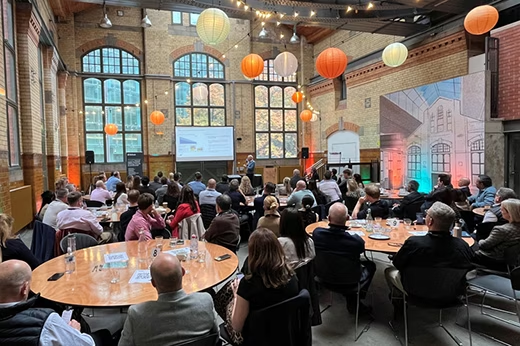
In our latest webinar, delivered in partnership with GovNews, we explored one of the most pressing challenges facing public sector organisations today: how adopting and operationalising PPN 006 principles can help organisations turn compliance into measurable decarbonisation.
This session highlighted the collaborative work between the London Borough of Sutton (LBS), Bellrock, and GreenMark (part of Bellrock), showcasing a practical and scalable approach to helping suppliers - particularly SMEs - meet the growing requirements around carbon reporting and sustainability assurance.
In the webinar, the objectives were:
- To understand who PPN 006 applies to and how other public bodies can align voluntarily
- To learn how GreenMark simplifies supplier evaluation and Carbon Reduction Plan monitoring
- To have access to a practical framework to turn alignment into measurable carbon reduction across your supply chain
Speakers included: Elio Dias, Head of Energy & Carbon at Bellrock, Luan Baptista Ribeiro, Climate Partnerships at London Borough of Sutton, and facilitating was Sophie Cook from GovNews.
Our supportive approach
We positioned PPN 006. not as a barrier but as an opportunity to build a better system.
Their framework focuses on:
- Structured supplier onboarding
- Consistent data collection
- Proportionate requirements for smaller suppliers
- Practical tools and guidance
- This turns compliance into a continuous improvement journey, rather than a once-a-year challenge.
The partnership between us and London Borough of Sutton
Through a partnership with us, Successful Sutton (BID) and GreenMark, the Council launched the Green Enterprise Partnership, supporting local businesses to measure, manage, and reduce their environmental impact
The results?
- 200+ local businesses supported
- 20%+ average emissions reduction
- Savings reinvested into further sustainability projects
In this webinar, Sutton Council and Bellrock shared how they turned policy into measurable decarbonisation - and how other public bodies can do the same.
Understanding PPN 006: Clarity Before Compliance
Before diving into implementation, Elio provided the audience with a practical overview of PPN 006 - what it requires, who it affects, and why so many public bodies are now adopting it voluntarily.
Outlining the core expectations:
- A publicly accessible Carbon Reduction Plan
- Reporting of Scope 1, Scope 2 and relevant Scope 3 emissions
- A commitment to achieving Net Zero by 2050
- Transparent evidence of planned reduction measure
For many suppliers, these requirements feel intimidating. For procurement teams, they can create bottlenecks and inconsistencies.
The GreenMark framework
The framework provides:
- Clear onboarding steps
- Simple, practical guidance
- A pathway from “early compliance” to “credible emissions reporting”
- Training that strengthens internal capability
- Tools that help suppliers collect, interpret and submit quality data
This approach shifts the dynamic from “policy enforcement” to partnership-led improvement.
The Sutton case study: Turning frameworks into action
Luan, from Sutton Council, then brought the framework to life with a detailed look at how Sutton is applying it across its supplier base.
He explained how the council:
- Identified early capability gaps
- Prioritised support for smaller suppliers
- Used structured onboarding to create consistency
- Began building a database of comparable emissions data
- Created transparency around supplier progress
- Used insights to target the high-impact areas of their supply chain
Sutton’s experience demonstrated that meaningful decarbonisation doesn’t begin with perfect data - it begins with clarity, proportionate expectations, and a system that supports suppliers at every maturity level.
Live demo: The power of visibility
A highlight of the session was Elio’s live demonstration of the Supply Chain and GreenMark dashboards.
Attendees saw how the platform enables procurement and sustainability teams to:
- Monitor supplier onboarding in real time
- Track the quality and completeness of emissions data
- Identify non-compliant or at-risk suppliers
- Compare maturity levels across categories
- Pinpoint carbon “hotspots” and target interventions
- Evidence progress for internal reporting and audit
You can watch the demo live in the recording.
Lessons learned and what organisations should do next
In the closing discussion, Elio and Luan were asked to share the lessons they would offer to any organisation embarking on a similar journey.
Their guidance was clear:
- Don’t underestimate the capability gap - support it.
- Start with simple, structured steps.
- Be proportionate with smaller suppliers.
- Focus on consistency before complexity.
- Invest in tools that make data meaningful, not burdensome.
On the question of transferability, both speakers emphasised that the Sutton model is highly adaptable to councils, NHS trusts, universities and central government bodies - provided the approach is tailored to the maturity of their supply base.
Their final piece of advice for procurement teams: Start supplier engagement early, communicate expectations clearly, and give suppliers a pathway they can realistically follow.
Closing Thoughts
The webinar concluded with a strong message: supply-chain decarbonisation is a collective journey, not a compliance task.
Through partnership, data transparency and capability building, organisations can turn PPN 006 from a policy document into a catalyst for genuine environmental progress.
If you missed the live webinar, you can watch the recording here